
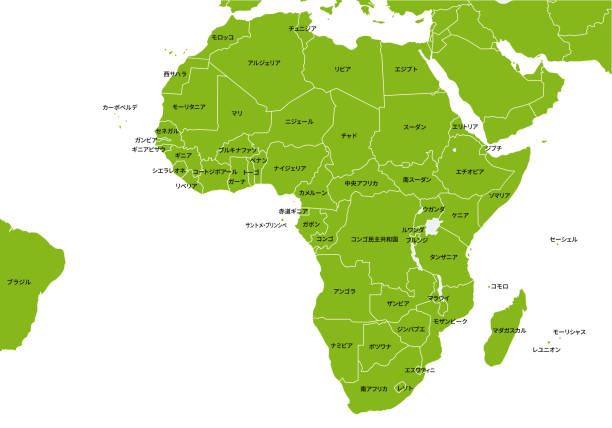
01 — Continental Overview
From post-pandemic surge to measured recovery
Africa's headline growth story over the past four years is one of normalization. The 4.8% expansion recorded in 2021, buoyed by commodity windfalls and pent-up demand, gave way to a more sober 3.1% in 2023 as global financial conditions tightened and commodity price volatility bit into export revenues across the continent.
But the trajectory is now turning. A gradual recovery to 3.7% in 2024 and a projected 4.3% in 2025 reflects improving macroeconomic fundamentals, monetary easing in key economies, and reform momentum that - while uneven - is gathering pace in several strategic markets.
"Africa remains a medium-growth frontier with cyclical pressures easing. The case for patient, long-term capital has rarely been clearer but the selection of entry point matters enormously."
For investors accustomed to the sharp-edged certainties of developed markets, Africa demands a different analytical posture. The continent is not a single investment thesis, but rather a mosaic of five distinct growth stories, each shaped by commodity exposure, demographic trajectory, infrastructure gaps, and policy environment.
Africa's medium-term growth outlook is strengthening. The case for patient, long-horizon capital particularly from Japan's development-linked finance institutions and trading houses is improving as cyclical headwinds fade.
02 — Regional Performance
Five regions, five diverging stories
Drilling beneath the continental average reveals a landscape of widening divergence. East Africa is accelerating; Southern Africa is stagnating. West Africa is stable but fragmented. North Africa is reforming under pressure. Central Africa is rich in resources and risk in equal measure.
North Africa — 4.2% in 2025
Growth slowed from 5.4% in 2021 to 3.6% in 2024 before a projected rebound, shaped by energy price swings, fiscal consolidation, and sharp exchange rate adjustments - most visibly in Egypt and Tunisia.
Energy | Infrastructure | Manufacturing
West Africa — 4.4% in 2025
Relatively stable growth in the 3.8–4.4% band throughout the period, anchored by Nigeria, Ghana, and Côte d'Ivoire. Diversified exposure across oil, agriculture, and a rapidly expanding services sector.
Consumer goods | Agribusiness | Fintech
Central Africa — 4.5% in 2025
A strong rebound from 3.4% in 2021 to 5.1% in 2022, stabilizing around 4–5% since. Growth is tightly coupled to extractive industries and the volatility of global commodity cycles.
Mining | Energy | Logistics
East Africa — 5.7% in 2025
★ Top pick for Asian investors
The standout performer, notwithstanding a sharp dip to 1.5% in 2023. The subsequent acceleration to 4.9% in 2024 and 5.7% in 2025 is underpinned by infrastructure investment, demographic tailwinds, and a maturing services economy.
Infrastructure | Manufacturing | Healthcare | Urban dev.
Southern Africa — 2.7% in 2025
Consistently the continent's weakest performer. Growth dipped to 1.6% in 2023 before a modest projected recovery. Structural constraints particularly energy shortages and low productivity weigh heavily on the outlook.
Selective efficiency-driven investments rather than broad growth plays remain the more defensible thesis for this region. South Africa's incremental reform programme and Zambia's debt restructuring completion offer the clearest near-term catalysts.
Efficiency plays | Reform opportunities
03 — Implications
Where Asian and Japanese capital fits
For Japanese investors in particular, Africa's growth mosaic aligns well with established competencies. Infrastructure development from transport corridors to power generation remains the most direct point of entry, and East Africa's accelerating investment pipeline offers a deep project pipeline aligned with JICA's development finance mandates and the TICAD framework.
Beyond infrastructure, three convergences stand out. First, Japan's ageing industrial base finds natural extension in Africa's young, urbanizing workforce manufacturing partnerships, particularly in East and West Africa, present genuine long-term value. Second, the energy transition creates aligned incentives: Japan's decarbonization goals and Africa's resource endowment (rare earths, green hydrogen potential, solar) point toward durable strategic partnerships. Third, healthcare, chronically undercapitalized across the continent, aligns with Japan's strength in medical technology and pharmaceutical distribution.
"The most defensible position for Asian investors is not picking a single country - it is picking a sector with continental tailwinds and then identifying the two or three markets where that sector's enablers are most advanced."
West and North Africa offer the stability and scale that institutional investors require. Central Africa rewards specialists with high risk tolerance and proven capacity for local partnership. Southern Africa, despite its structural headwinds, still offers selective opportunities for efficiency-focused capital, particularly in logistics and energy infrastructure where bottlenecks are acute.
Sector alignment with Japan and Asia:
Infrastructure · Energy transition · Industrial manufacturing · Healthcare · Agribusiness · Logistics · Urban development · Fintech · Consumer goods
The overarching message for Asian investors is one of calibrated optimism. Africa's medium-term growth trajectory is improving, the reform momentum in several markets is genuine, and the demographic dividend - deferred for so long - is beginning to translate into real consumer demand and labour force depth. The risks are real: FX volatility, policy inconsistency, and infrastructure gaps all deserve serious weight in any investment thesis. But the window for establishing first-mover positions in the continent's highest-potential sectors is narrowing.