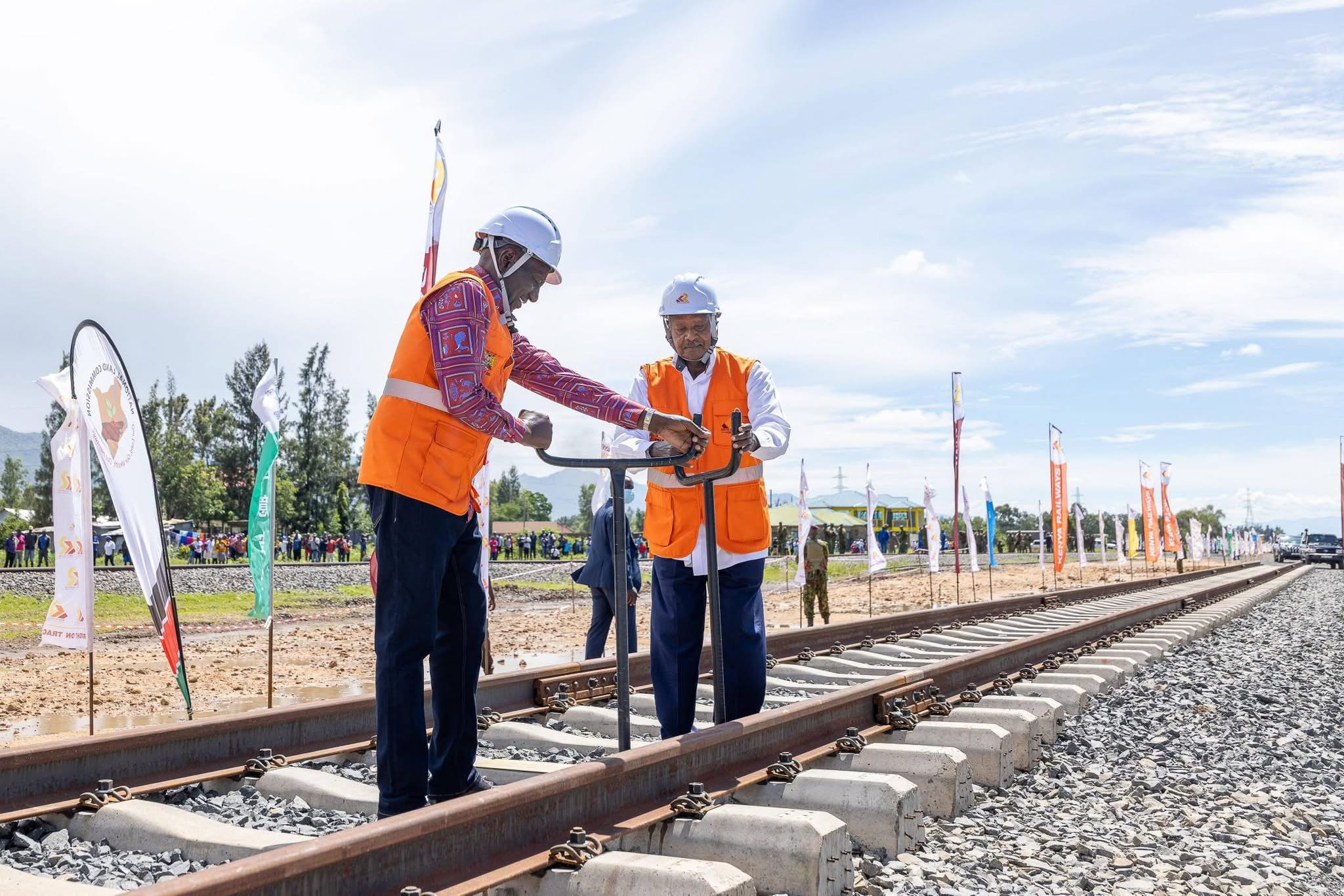
The March 2026 launch of the Standard Gauge Railway (SGR) extension by William Ruto and Yoweri Museveni marks a significant turning point in East Africa’s infrastructure landscape and presents a compelling entry point for Japanese investors seeking long-term, stable engagement in the region. Extending the railway from Naivasha through Kisumu to Malaba on the Uganda border, the project revives a strategically critical corridor linking the Port of Mombasa to inland markets across East and Central Africa. Once connected to Uganda’s network and, in the future, to Tanzania’s rail system, the corridor will form a continuous logistics chain connecting the Indian Ocean to some of Africa’s most resource-rich and fast-growing economies.
The importance of this development lies primarily in its potential to structurally reduce one of the most persistent barriers to operating in Africa: high logistics costs. In Kenya and Uganda, transport expenses currently account for between 30 and 40 percent of the final value of goods. The SGR is expected to reduce freight costs by approximately 40 percent while cutting transit times between Mombasa and Kampala from several days by road to roughly 24 hours by rail. This shift has direct implications for competitiveness. Lower landed costs, improved delivery predictability, and enhanced inventory management will allow Japanese firms, known for their emphasis on quality, reliability, and precision, to operate in a manner more consistent with their global standards.
Road transport across the region has long been subject to congestion, delays, and variability in delivery times. By contrast, rail offers scheduled, high-capacity freight movement, with a single train capable of carrying up to 4,000 tonnes. This transition from road to rail will reduce exposure to operational uncertainty and aligns closely with Japanese corporate priorities around on-time delivery, quality control, and stable supply. For companies managing regional distribution networks or considering just-in-time or lean inventory systems, this enhanced reliability is particularly significant.
From a strategic perspective, the SGR should not be viewed as a national infrastructure project, but rather as a regional trade corridor. For businesses, this enables a hub-based market entry strategy, with Kenya serving as the primary gateway and logistics base, and the railway facilitating efficient expansion into Uganda, Rwanda, the Democratic Republic of the Congo, and beyond. This corridor approach significantly increases market reach while minimizing duplication of infrastructure and operational costs. It is especially relevant for trading houses, logistics providers, and manufacturers seeking to serve multiple countries from a single operational platform.
The sectors most likely to benefit from this transformation align closely with areas of established Japanese expertise. In logistics, there are clear opportunities in inland container depots, warehousing, and cold chain development, particularly around emerging hubs such as Kisumu. In manufacturing, reduced input costs and improved distribution networks make localized production more viable, supporting the development of industrial clusters along the corridor. Agro-processing also presents strong potential, given western Kenya’s output of tea, maize, sugar, and rice, as well as the fisheries of the Lake Victoria basin. Japanese strengths in food processing, packaging, and quality assurance could significantly enhance value addition in these sectors. While the core railway construction has been led by China Communications Construction Company, there remain opportunities in operations and maintenance, signaling systems, and associated infrastructure where Japanese technology and service standards are highly competitive.
Another important dimension is the evolving financing model underpinning the project. Kenya’s move toward revenue securitization using proceeds from its railway development levy, estimated at approximately $270 million annually signals a shift toward more sustainable and internally supported infrastructure financing. For investors, this reduces reliance on external sovereign borrowing and enhances overall project bankability. It also opens potential avenues for participation by financial institutions and infrastructure funds, particularly in structured or public-private partnership arrangements.
This development aligns closely with Japan’s broader strategic engagement in Africa, including the priorities articulated through the Tokyo International Conference on African Development (TICAD) and the emphasis on high-quality infrastructure investment. It also supports Japan’s ongoing efforts to diversify supply chains and deepen economic ties with emerging markets. As such, the SGR corridor represents not only a commercial opportunity but also a platform for strategic partnership and long-term presence.
Risks remain, as is typical in large-scale infrastructure projects in emerging markets. These include execution risks linked to financing and construction timelines, the need for effective cross-border regulatory coordination, and the requirement for sufficient freight volumes to meet projections. Currency fluctuations and political considerations also warrant careful assessment. However, these risks are increasingly mitigated by strong political backing at the highest levels, regional integration frameworks such as the East African Community and the African Continental Free Trade Area, and the adoption of more sustainable financing mechanisms.
In strategic terms, the most effective approach for interested companies is likely to be a phased, corridor-based entry. Establishing an initial presence in Kenya as a logistics and distribution hub, leveraging the SGR for inland expansion, and gradually scaling operations across neighboring markets offers a balanced pathway that combines opportunity with risk management. Early entrants are likely to benefit from first-mover advantages, stronger local partnerships, and favorable positioning as the corridor matures.
The Kenya–Uganda SGR expansion should be understood not simply as a transport project, but as a foundational economic artery. By lowering trade costs, improving connectivity, and integrating regional markets, it creates the conditions for sustained industrial growth and cross-border commerce. It represents a rare convergence of infrastructure development, market expansion, and strategic alignment, an opportunity to engage in East Africa with greater stability, efficiency, and long-term potential.